Research

How are cell behaviors regulated at the molecular level?

We follow cell behaviors dynamically in living organisms – before, during and after a behavior initiates.

We use genetics, high resolution in vivo imaging, genomics and computational approaches.

Model system

The linker cell

We use C. elegans as our discovery engine because it allows us to track individual cells live within an intact multicellular organism.

Our central model is the linker cell, a male-specific cell that migrates, kills itself at a specific developmental stage, and is then engulfed by specialized neighboring cells.

We translate our findings to mammalian systems to test conservation, and to human tissues to develop therapeutic strategies for cancer and other diseases.

Linker cell migration, death and engulfment

Linker cell: migration · death · engulfment

Research questions

Three questions we are asking

01
Developmental cell death

How is developmental cell death regulated? How is it dysregulated in disease?

We study Linker Cell-type Death (LCD), a novel non-apoptotic cell death program. Cells with LCD morphology are observed in mammalian and human tissues during normal developmental death, in aging, and in multiple diseases, such as neurodegenerative conditions, metastatic cancer, cardiomyopathies, and others. Despite its prevalence in health and disease, how LCD is regulated at the molecular level remains largely unknown.

Open questions
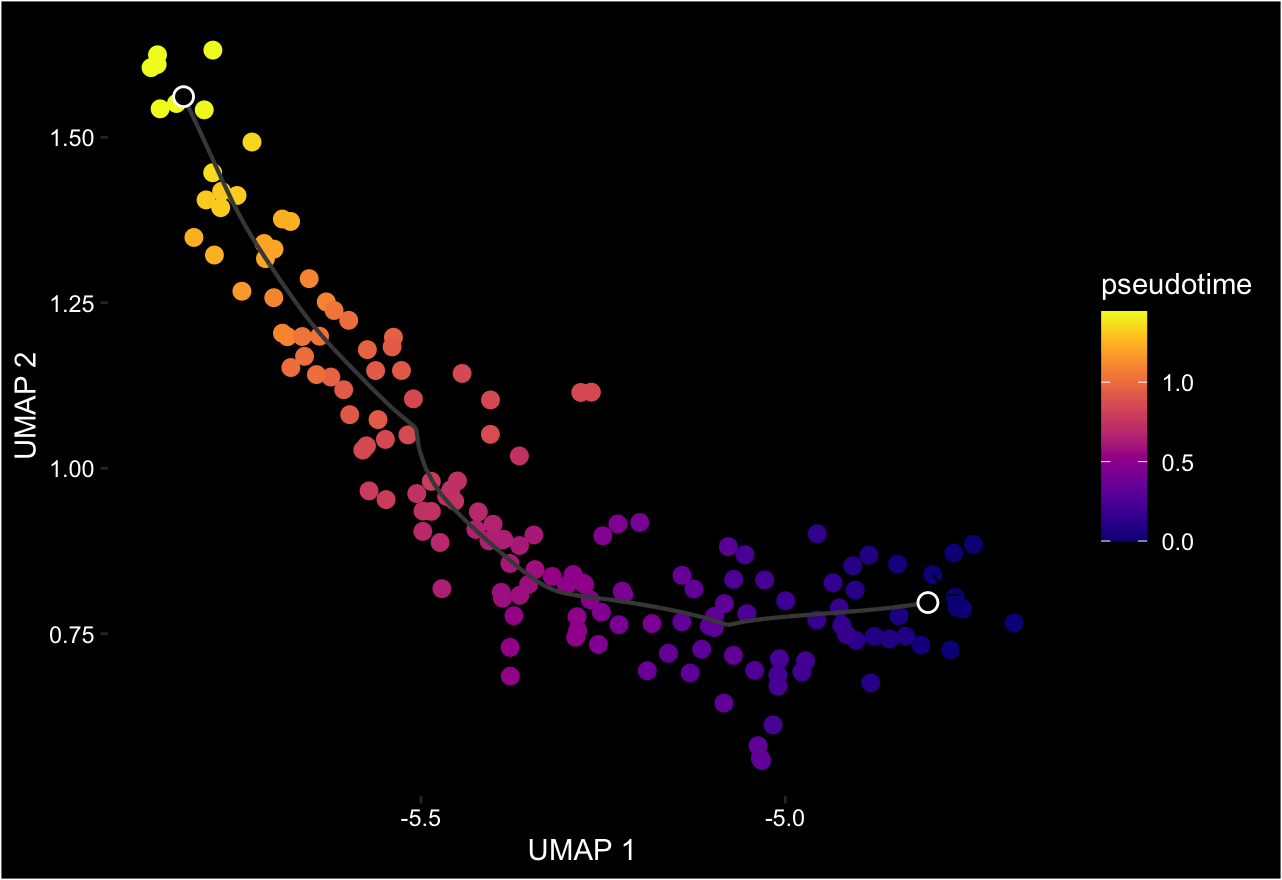
Pseudotime trajectory

What are the conserved biomarkers of LCD?

Which diseased cells exhibit LCD transcriptional signatures?

Organelle degeneration, microscopy

How is organelle degeneration regulated during cell death?

How does organelle degeneration contribute to human disease?

Dying cell schematic

Virtual dying cell: how do functional networks shape the cell biology of the degenerative process in vivo?
02
Cell migration

What intrinsic factors regulate single cell migration?

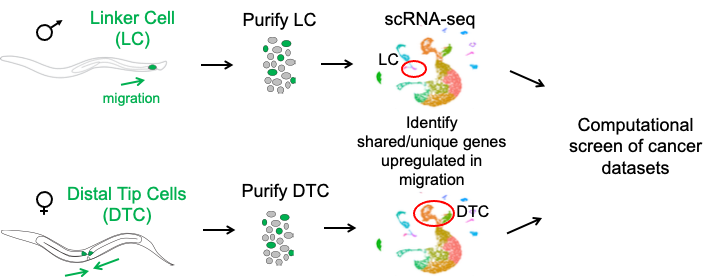
We performed single cell RNA-sequencing of two migrating cell types: the male linker cell, which dies after migrating, and the hermaphrodite distal tip cells, which form stem cell niches. By comparing them, we aim to identify which parts of their migration programs are shared and which are unique, and whether these regulators are conserved and contribute to cancer metastasis.

scRNA-seq of linker cell and distal tip cells
Linker cell (LC) and distal tip cell (DTC) scRNA-seq · computational screen of cancer datasets
03
Cell engulfment

How do dying and engulfing cells communicate?

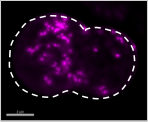
Linker cell surrounded by the engulfing cell membrane
Linker cell and its deformed nucleus surrounded by the membrane of the engulfing cell · Image by Betty Ortiz-Gonzalez

Our work revealed an intimate communication between the dying linker cell and its engulfing cells. Surprisingly, the apoptotic executioner caspase (CED-3) acts non-canonically to promote membrane scission as the linker cell splits asymmetrically, a step required for proper engulfment.

Open questions

Do caspase targets signal to the engulfing cells?

How does the transcriptional profile of the engulfing cell change before and after it encounters the dying cell?

Is this engulfment mechanism conserved in human immunity?

Join our laboratory

We are hiring

We are recruiting a postdoc with mammalian (cell culture) and computational expertise.

Contact us